
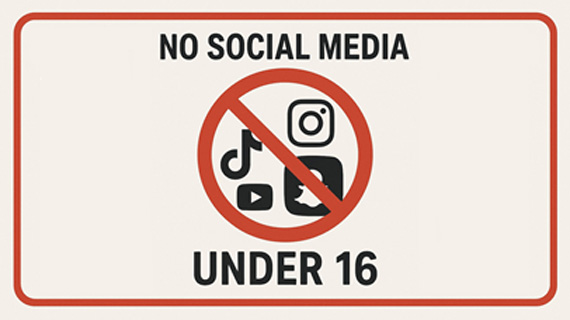
Since when has protecting children been “Unconstitutional”?
Dr Rita Princi-Hubbard, Honorary CEO, Children and Media Australia.
As debate intensifies around Australia’s world-first under-16 social-media laws, some headlines suggest the reforms may be “unconstitutional” and are now headed for the High Court. For many parents, this raises an obvious question: since when has it been unconstitutional to protect children?
For generations, Australia has had laws recognising that young people need extra safeguards as they develop. We set minimum ages for driving, for drinking alcohol, for leaving school, for working, for accessing adult content, for gambling, even for tattoos. No one has seriously argued that these long-standing protections undermine democracy.
So why is social media suddenly being treated differently?
The argument being mounted in court is not about child safety at all — it is about politics. A small libertarian-leaning group, supported by two 15-year-old plaintiffs, claims that preventing under-16s from having social media accounts restricts their ability to engage in political communication. That is the constitutional hook they are relying on. It’s a novel argument — and it says far more about the digital age than about the true needs of children.
Let me be clear: children do not need unfettered access to addictive, algorithm-driven platforms in order to participate in civic life. They do need stability, sleep, mental-health support, privacy, and protection from predatory design and harmful content. The research is increasingly clear on this: for early and mid-teens, high-intensity social-media exposure is associated with poorer wellbeing, anxiety, disrupted sleep and increased risks of bullying and exploitation.
Parents know this intuitively. You see the effects on mood, school engagement, friendships and family life. You don’t need a constitutional lawyer to tell you what is harmful in your own home.
The truth is this: regulating social media is not an attack on young people — it is an act of care. The reforms recognise that the online world has changed dramatically, and our children’s brains, relationships and wellbeing are being shaped by forces that most adults never experienced at their age.
As for who is backing the challenge? It’s not “just teenagers”. There are well-resourced digital-rights activists, political figures with libertarian agendas, and — let’s be realistic — an enormous commercial ecosystem that benefits when children stay online longer. Big Tech may be staying quiet publicly, but they have billions of dollars at stake and a long track record of resisting regulation through any available channel.
Parents deserve clarity. These laws are not perfect — no law ever is — but they are designed with protection in mind. They remind us that childhood still deserves boundaries, even in the digital age.
And they signal something important: it is not unconstitutional to protect children. It is our responsibility.
If anything, the real question is not whether the law goes too far, but whether we — as parents, educators, and a society — are prepared to step up alongside it. Our children and teenagers don’t just need rules; they need guidance, communication, support, and balance at home. Social media is changing rapidly. We must adapt with it — courageously, compassionately, and always with the wellbeing of children at the centre.
********************************************************



0 Comments